A good ride rarely depends on one perfect piece of gear. It depends on a few useful things working well together. Cycling Accessories can improve comfort, visibility, and readiness when conditions change. A bright rear light matters on a gray morning. A small repair kit matters when a tire loses air miles from home.
This guide explores ten accessories riders commonly consider, from helmets and lights to pumps, locks, and bottles. Their value depends on the ride. A commuter crossing busy streets may prioritize visibility and secure storage. Someone riding quiet country roads may care more about carrying water and fixing a puncture. There is no universal setup.
Small details count. Fit matters. A helmet should feel secure, not merely look sleek. Lights need to be visible in the conditions you actually ride through. A pump that is too bulky may stay at home, which rather defeats its purpose. Even useful gear can become clutter, and buying more does not automatically make a ride safer or better.
The list focuses on practical choices, not expensive upgrades. It also leaves room for honest trade-offs: budget, bike type, weather, and personal comfort all shape what belongs in a kit. Before choosing, check compatibility and follow the manufacturer’s instructions, especially for helmets and lighting. The best accessories are the ones you can use confidently and remember to bring.
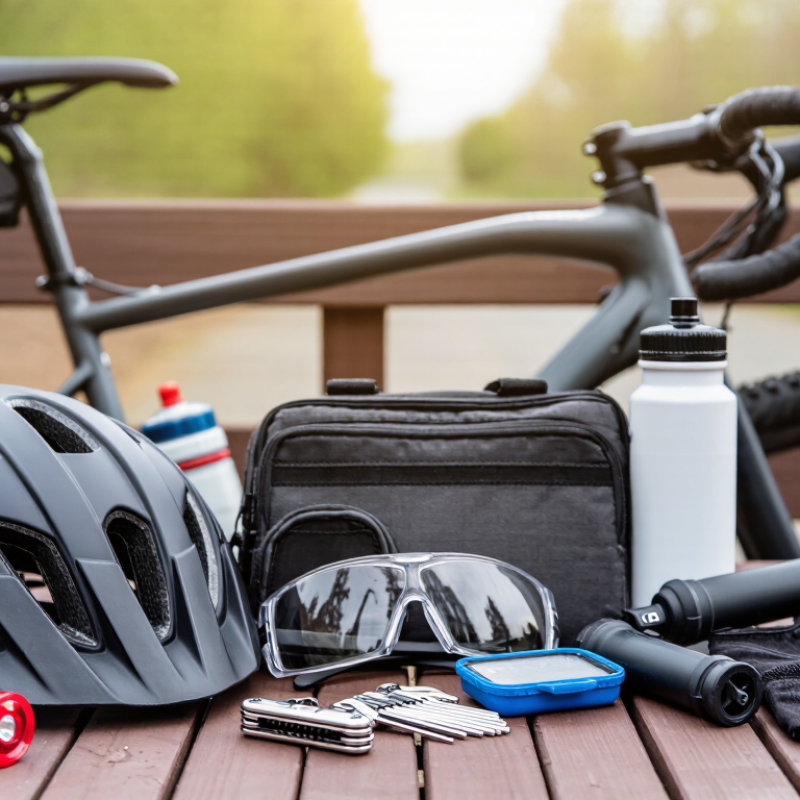
Cycling accessories are add-on items that improve visibility, safety, comfort, carrying capacity, or basic roadside repair. A helmet, front and rear lights, a lock, a pump, and a small repair kit serve different needs. The right selection depends on the ride, not a universal ranking. A wet commute needs reliable lights and weather protection; a long rural route makes spare tubes and water storage more useful. Not every add-on helps. Extra weight, awkward mounting, or poor fit can make equipment less useful in practice.
Start by considering route, weather, ride length, and what your bicycle can safely accommodate. Check that lights mount securely, bags do not obstruct steering, and tools match the bicycle’s components. PeopleForBikes’ 2024 U.S. Bicycling Participation Report estimates that 112 million Americans rode a bicycle in 2023, showing how varied riders’ needs can be. NHTSA’s 2022 Traffic Safety Facts reported 1,105 pedalcyclist deaths in the United States. These figures do not prove that any single accessory prevents crashes, but they make visibility and protective equipment worth careful consideration. That trade-off matters. Certification requirements differ by location, so check local guidance and helmet fit rather than relying on appearance alone. I would also reassess the kit after real rides: the compact pump that seemed ideal may be difficult to use with cold hands.
A practical selection balances safety, repair readiness, comfort, and visibility. The chart compares approximate weights of common accessory types; actual weights vary by design and size.
Helmets and lights support visibility and protection, while a spare tube, tire levers, pump, and multitool help with common roadside repairs. A lock, bottle and cage, and bell add everyday security, hydration, and awareness.
What Are the Top 10 Cycling Accessories?
Essential Safety Accessories for Everyday Riding
For everyday rides, a well-fitted helmet, front and rear lights, and reflective details deserve priority. The World Health Organization’s road-safety guidance reports that helmets can reduce the risk of head injury by about 69%. Choose a helmet that sits level and snug, without rocking when you move your head. Small details matter. A loose chin strap can undo a careful fit. Use lights even in daylight, and keep their lenses clean. Reflective ankle or side details can help drivers notice movement from different angles.
The risk is not theoretical. The U.S. National Highway Traffic Safety Administration reported 1,105 bicyclist deaths in U.S. traffic crashes in 2022. A bell, a small mirror, and a bright, weather-appropriate outer layer can support awareness and visibility. Check that the bell is easy to reach, and angle the mirror to show approaching traffic rather than your shoulder. A mirror can still be ignored. Accessories help, but they cannot replace attentive riding or safer streets.
Carry a basic repair kit, too: tire levers, a spare tube, and a compact pump can prevent a roadside stop in poor visibility. A small first-aid pouch is useful for minor scrapes. Inspect lights, straps, and tire pressure before leaving; I’d admit it is easy to skip that check when running late. The NHTSA figures describe U.S. crashes, not every rider’s personal risk, but they make visibility and preparation worth the extra minute.
Visibility accessories help other road users notice a cyclist before they need to react. A white front light and red rear light are useful in dim conditions, even on familiar streets. Aim the front beam toward the road, not directly into oncoming faces. Check both lights before leaving; a loose mount can slowly tilt downward over rough pavement. Small detail, big difference.
Reflective ankle bands and bright outer layers add motion cues, especially at dusk or in rain. They do not replace lights, and dark clothing can still disappear against a shadowed background. Visibility is not a guarantee. Riders should also consider a compact mirror or a bell, which can help them monitor nearby traffic and signal their presence without sudden moves.
For navigation, a handlebar phone mount keeps directions within sight, while a dedicated cycling computer can show routes without requiring a phone screen. Secure any device firmly and set the route before moving; tapping through menus at an intersection is a poor habit. Offline maps are useful where reception drops, but route data can be stale. I would still check unfamiliar turns against street signs. Electronics make navigation easier, not perfect. A paper map in a small waterproof sleeve may feel old-fashioned, yet it can be a calm backup when a battery runs low.
| Rank | Accessory | Main Purpose | Typical Features | Power or Setup | Best Use and Practical Note |
|---|---|---|---|---|---|
| 1 | White Front Bike Light | Helps the rider see the road and helps others notice the bicycle. | Steady and flashing modes; adjustable brightness; handlebar mount. | Usually rechargeable or battery-powered. | Choose a beam suited to the route: brighter, broader beams are useful on unlit roads, while lower settings can suit lit streets. Aim it to avoid dazzling others. |
| 2 | Red Rear Bike Light | Makes the bicycle more visible from behind. | Steady and flashing modes; seat-post or frame mounting; some models include a low-battery indicator. | Usually rechargeable or battery-powered. | Mount it securely where it is not blocked by a bag, clothing, or the rider. Check local rules for permitted light modes. |
| 3 | Reflective Vest or High-Visibility Outerwear | Improves how easily a rider can be seen, especially when vehicle lights illuminate reflective material. | Bright colors for daytime visibility; reflective panels or strips for low-light conditions. | No power required. | Wear it where it remains visible from the front, sides, and back. Reflective material works best when light shines on it; it does not replace active lights. |
| 4 | Reflective Ankle Bands | Add moving points of visibility that can help distinguish a cyclist from roadside objects. | Reflective surfaces; adjustable or elastic fit; often worn around the ankles or lower legs. | No power required. | Wear them snugly without restricting movement. They complement, rather than replace, front and rear lights. |
| 5 | Reflective Wheel or Frame Details | Provide additional side visibility to approaching traffic. | Reflective spoke elements, wheel-side material, or frame tape. | No power required. | Keep reflective elements clean and securely attached. Check that spoke-mounted items do not interfere with brakes, tires, or other moving parts. |
| 6 | GPS Cycling Computer with Turn-by-Turn Navigation | Displays route guidance and ride information without requiring a phone to be mounted on the handlebar. | Route maps or breadcrumb guidance; distance and speed data; some units support rerouting and sensors. | Rechargeable battery; route and map features vary by model. | Useful for planned rides and unfamiliar roads. Load the route in advance and check battery life before longer rides. |
| 7 | Handlebar Phone Mount | Keeps a phone accessible for map-based navigation. | Adjustable viewing angle; handlebar attachment; some designs include vibration-damping features. | Requires a compatible phone; a charging cable or power bank may be useful on long rides. | Use a secure mount and set the route before riding. Stop in a safe place before interacting with the phone. |
| 8 | Portable Power Bank | Provides backup power for a phone or rechargeable lights on longer trips. | USB output; capacity commonly listed in milliampere-hours; some models support more than one device. | Must be charged before the ride; cable compatibility matters. | Check the device’s charging requirements and pack the correct cable. A power bank adds weight and should be stored securely and protected from water. |
| 9 | Bar-End or Handlebar Mirror | Allows a rider to check approaching traffic behind without turning fully around. | Adjustable mirror angle; bar-end or handlebar mounting. | No power required. | Adjust it while stationary and check that it does not obstruct controls. Mirrors supplement shoulder checks and do not show every blind spot. |
| 10 | Helmet-Mounted Light | Adds a movable point of light that follows the rider’s gaze. | Directional beam; compact mounting system; often offers multiple light modes. | Usually rechargeable or battery-powered. | Best used as a supplement to properly mounted bicycle lights. Avoid aiming it directly at other road users, and check that the mount is secure. |
For longer rides, comfort is not a luxury; it helps you stay focused and pedal smoothly. A well-fitted helmet, padded shorts, gloves, and a saddle suited to your body can reduce pressure and numbness. Add cycling shoes that hold your feet securely, a breathable jersey, and sunglasses to soften glare and keep dust out. Fit matters more. Even expensive gear can feel wrong if it pinches or shifts.
A bottle-and-cage setup makes drinking easier without stopping, while a mini pump and multitool can help with common roadside problems. These ten accessories work best as a system: clothing manages heat, contact points reduce rubbing, and basic tools add confidence. Still, gear has limits. A new saddle will not fix a poor riding position, and extra padding can sometimes create more friction.
Tips: Test one change at a time on a short ride before relying on it for hours. Check that bottles are easy to reach, gloves do not bunch, and shoes leave room for your toes. Small details add up. I sometimes overlook the simplest check: whether everything still feels comfortable after an hour.
A flat tire can turn a short ride into a long walk. Carry two tire levers, a spare tube that matches your wheel, and a compact pump. Add a patch kit for a second puncture. A multitool with the correct hex keys can tighten a loose bottle cage or saddle bolt. PeopleForBikes’ 2024 U.S. Bicycling Participation Report says 112 million Americans rode a bike in 2023. That broad participation makes practical roadside preparation worth considering, though the report does not measure accessory use. Keep the kit small enough to carry consistently.
Storage matters between rides, too. A stable floor stand or padded wall hook can keep a bike upright and protect its frame. Store tools and spare tubes in a dry, visible container; hidden gear is easy to forget. For the road, a frame bag keeps weight close to the bike, while a small saddle bag suits a minimal repair kit. Panniers work better for extra clothing or groceries, but can feel cumbersome on narrow paths. More capacity is not always better.
Tips: Check tire pressure before leaving. Test your pump at home. A repair kit is only useful if its parts fit your wheels—and if you know how to use them. My own packing rule would be simple: carry less, then review what you actually needed after each ride.
Start with a well-fitted helmet, front and rear lights, and reflective details. Small details matter.
It should sit level and snug, without rocking when you move your head. Keep the chin strap secure.
Yes. Use a white front light and red rear light, and keep both lenses clean. Aim the front beam toward the road.
No. Reflective ankle bands and bright clothing add visibility, especially at dusk or in rain. Visibility is not a guarantee.
A reachable bell can signal your presence, while a small mirror can show approaching traffic. Angle it carefully; it can still be ignored.
Pack tire levers, a spare tube, and a compact pump. They can help you avoid a roadside stop.
Test the lights, tighten loose straps, and check tire pressure. I sometimes skip this when running late.
Set your route before moving, and secure your phone mount or cycling computer. Offline maps can help, but route details may be stale. A paper map can be a calm backup.
Cycling Accessories can make everyday rides safer, more comfortable, and better prepared for unexpected challenges. Choosing them starts with considering where and how you ride, then prioritizing useful, reliable items over unnecessary extras. Essential safety gear helps protect riders and supports preparedness, while visibility tools make it easier for others to notice you in changing light or busy surroundings. Navigation aids can also help you stay on course and plan unfamiliar routes with confidence.
For longer rides, comfort and performance accessories can reduce strain and help you maintain a steady pace. Practical repair tools and basic supplies are valuable if a minor problem occurs along the way, while storage and carrying options keep necessities organized and accessible. The best setup is personal: select accessories that suit your routes, riding habits, and available carrying space, and check your equipment before setting out.