Workshop Tools
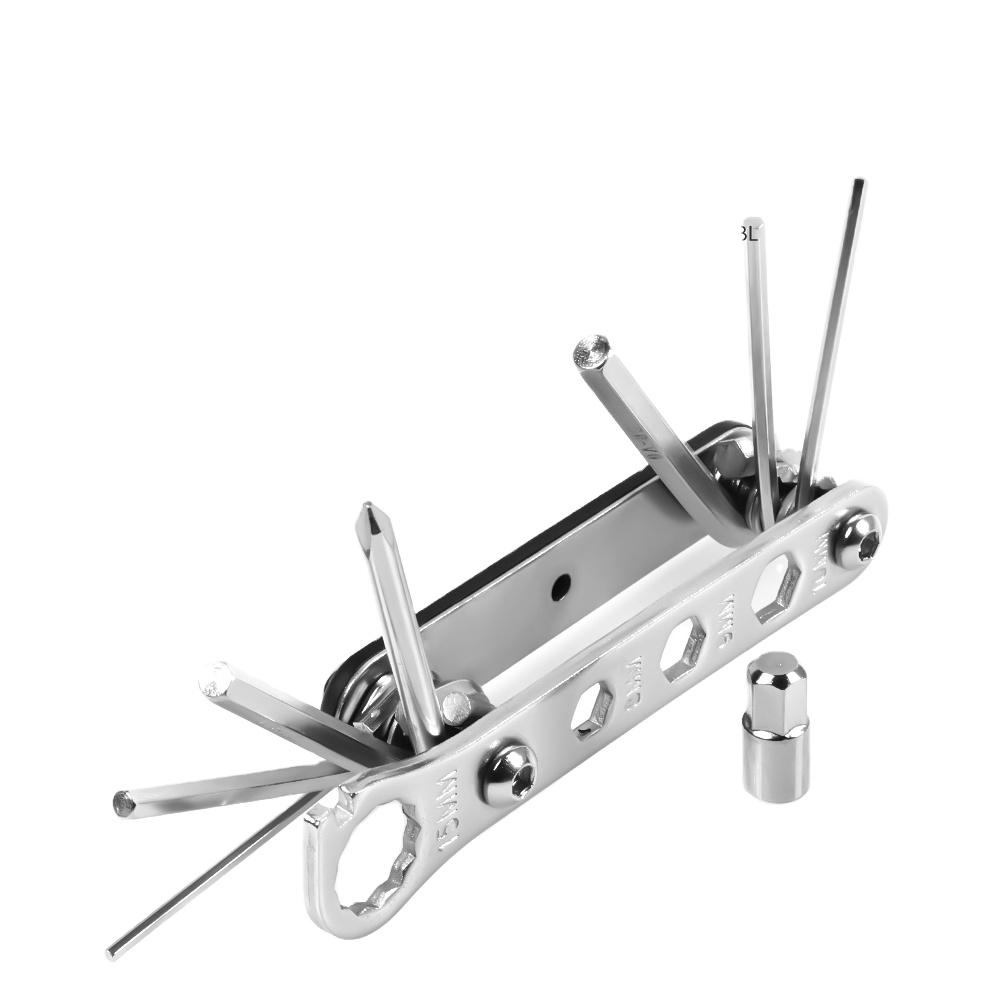
13 In1 Portable Folding Combination Mini Tool Multifunctional Bicycle Tool Kit Repair Set
- Chrome-Vanadium Hardened Alloy
- CNC Surface Anti-Corrosion Finish
Direct-from-factory production lines: audited smart microelectronics, precision hardware, and integrated cycling safety gear engineered for worldwide commercial supply chains.
Modern cycling safety demands have shifted the bicycle tail light from a passive, continuous red beacon to an active, vehicle-grade kinetic warning instrument. In contemporary micro-mobility environments, rear-end collisions represent over 38% of vehicular-cycling accidents on arterial roadways. For product development managers and procurement directors at major bicycle brands, selecting an OEM manufacturing partner requires inspecting the underlying electromechanical engineering: 3-axis vs. 6-axis MEMS accelerometer integration, filtering algorithms for road vibrations, optical lens collimation, and power conservation architectures.
The core challenge in manufacturing an autonomous bike brake light lies in distinguishing between deliberate mechanical braking deceleration and high-frequency vibrational noise caused by cobblestones, potholes, gear shifting, or aggressive pedaling cadence. As a custom OEM manufacturer, Kenus implements advanced digital low-pass FIR (Finite Impulse Response) filtering directly within the onboard microcontroller unit (MCU). Our customized firmware continuously calculates moving averages along the longitudinal axis of travel. When negative acceleration exceeds a calibrated threshold (typically -1.5 m/s² sustained for more than 45 milliseconds), the circuit instantly switches the high-efficiency surface-mount LEDs from low-power running mode (10–20 lumens) to hyper-luminous solid warning strobe (80–120 lumens) within 30 milliseconds.
Photometric distribution determines daytime visibility and glare prevention. In compliance with European road vehicle regulations (most notably the stringent German StVZO TA23 / TA14 and ECE R50 metrics), the light distribution cannot simply disperse raw lumen output spherically. Our mold tooling incorporates custom-engineered Fresnel lenses and total internal reflection (TIR) optical PMMA arrays. This redirects the flux downward and horizontally, ensuring a lateral viewing angle exceeding 220 degrees while preventing beam elevation that blinds trailing motorists. By focusing the luminous intensity across the critical 10-degree vertical cone, our OEM lights achieve a measurable beam throw in excess of 1,500 meters in daylight conditions while passing darkroom goniophotometer compliance sweeps.
Outdoor micro-mobility hardware routinely endures thermal expansion, high-pressure wheel-spray, sub-zero winters, and desert ambient heat. While commercial budget lights rely on snap-fit casings with perimeter silicone gaskets, Kenus utilizes automated high-frequency ultrasonic welding for all ABS/PC housings. For aluminum-bodied models, CNC aerospace-grade 6061 alloy barrels undergo micro-metered structural adhesive dispensing followed by automated O-ring compression. Every batch undergoes helium vacuum leak testing and sub-surface immersion checking, reliably guaranteeing IPX6 to IPX7 ingress protection.
Direct technical comparison across our standard, kinetic smart, and integrated e-bike brake light production platforms to streamline your OEM RFP qualification.
| Evaluation Parameter | Standard LED Safety Beacon | Smart Kinetic Brake Light (OEM Core) | Integrated E-Bike CAN/UART Light |
|---|---|---|---|
| Primary Application | Entry-level retail, commuter giveaways | Mid-to-high tier aftermarket, private-label | E-Bike OEM system integration (Bosch/Shimano) |
| Braking Detection System | None (continuous flash/steady) | MEMS 3-Axis / 6-Axis Accelerometer + Algorithm | Electronic Brake Sensor (e-Brake low-signal / CAN) |
| Output (Steady / Peak Brake) | 15 lm / No peak boost | 15–20 lm running / 100–120 lm braking burst | 30 lm running / 140 lm certified braking flash |
| Input Power Configuration | 2x AAA or micro-USB 300mAh | USB-C Fast Charge, 500–800mAh Li-Po | DC 6V–60V wide-voltage internal step-down |
| Automated Power Management | Manual rocker or silicone switch | Auto-sleep after 60s idle; auto-wake on motion | System-synchronized display console control |
| International Compliance | CE, RoHS | CE, RoHS, PSE, EMC (SIT Test Reports) | CE, RoHS, StVZO, E-Mark (ECE R50) |
| Custom Tooling MOQ | 2,000 units | 1,000 units (Custom Laser / Packaging from 500) | 500 units |
Anticipate shifting consumer demands, emerging safety mandates, and battery material innovations before finalizing your next procurement roadmap.
As electric bicycles, e-cargo transports, and speed pedelecs capture major urban mobility market share in Europe and North America, reliance on independent standalone battery charging is declining. OEM buyers now demand rear safety lights capable of native wide-input voltage tolerance (6V to 60V DC step-down converters). Kenus engineers integrated buck circuits that interface smoothly with internal motor controllers (including Bosch BES3, Shimano Steps, and Bafang systems), triggering brake lighting directly through e-brake cut-off sensors without auxiliary battery maintenance.
The premium cycling tier is witnessing rapid convergence between smart brake signaling and rearward millimeter-wave radar detection. Importers are requesting modular sensor suites that communicate via low-power ANT+ and Bluetooth 5.3 protocols. This allows the rear brake unit to adjust strobe velocity dynamically as a motor vehicle approaches from behind at high closing speeds, elevating situational alert intensity prior to deceleration while sending telemetry feeds directly to GPS bike computers.
European Union corporate sustainability directives (such as the Corporate Sustainability Due Diligence Directive - CSDDD) are pressing cycling distributors to trace embodied carbon. Procurement trends emphasize post-consumer recycled (PCR) polycarbonates for outer lens casings, modular snap-in battery packs that facilitate end-of-life battery recycling compliance, and 100% plastic-free soy-ink retail packaging tailored for high-volume retail shelves.
Engineering depth anchored in Jinhua, Zhejiang: TÜV Rheinland audited lines, authenticated CE/RoHS/PSE credentials, and rigorous in-house manufacturing oversight.
Unlike ordinary trading agents, Kenus Intelligent Technology Co., Ltd. operates an onsite-assessed manufacturing plant in Jinhua, Zhejiang. Our facility has passed strict verification for production floor safety, machinery throughput, cleanroom assembly, and systematic QA/QC governance with full audit reports accessible to procurement boards.
Eliminate customs rejection and regulatory disputes. Our lighting lines carry official third-party accredited test certificates: CE (SIT230614230201E), RoHS (SIT240417230101R & SIT24041230101R), Japanese METI PSE (SIT240226230301P), and EMC compliance inspection reports (SIT250212230201ER).
From initial rapid 3D printing prototyping to production mold machining, tube processing, precision welding, and robotic laser marking, Kenus shortens the new-product introduction (NPI) cycle by up to 40%. Importers can customize industrial housings, internal firmware thresholds, and packaging with low risk.
Clear, definitive answers to technical queries, compliance parameters, and manufacturing timelines raised by international procurement managers.