Featured OEM/ODM Production Models
Consolidating high-lumen illumination, passive retroreflective cargo systems, workshop-grade tools, and high-performance e-mobility platforms from our TÜV Rheinland-assessed Zhejiang manufacturing base.
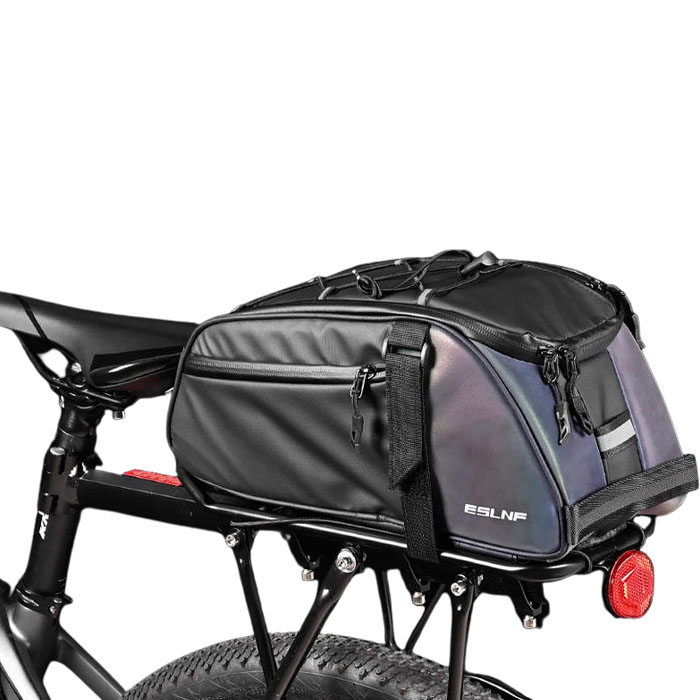

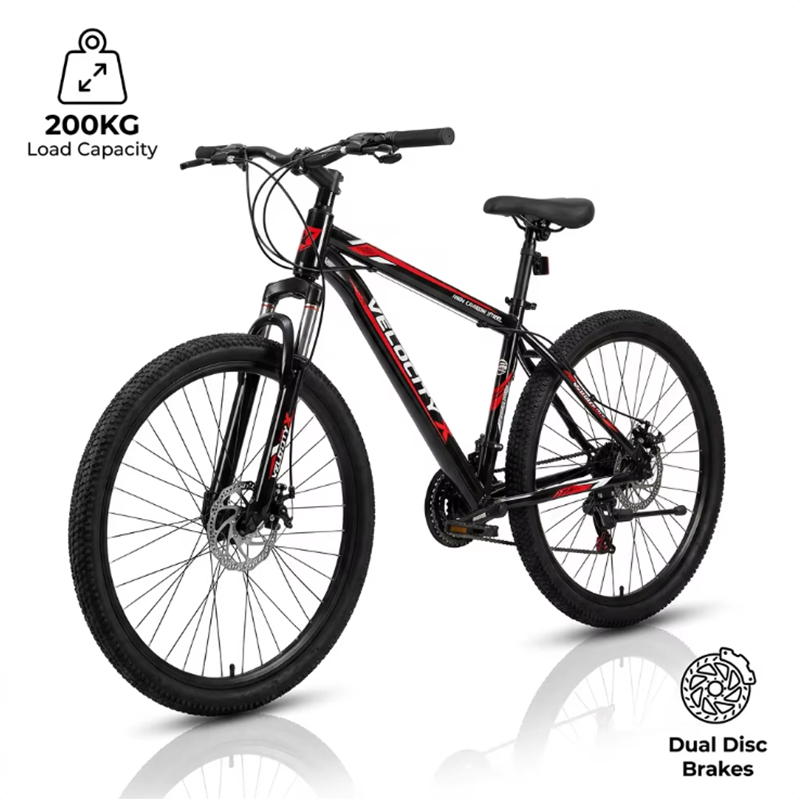

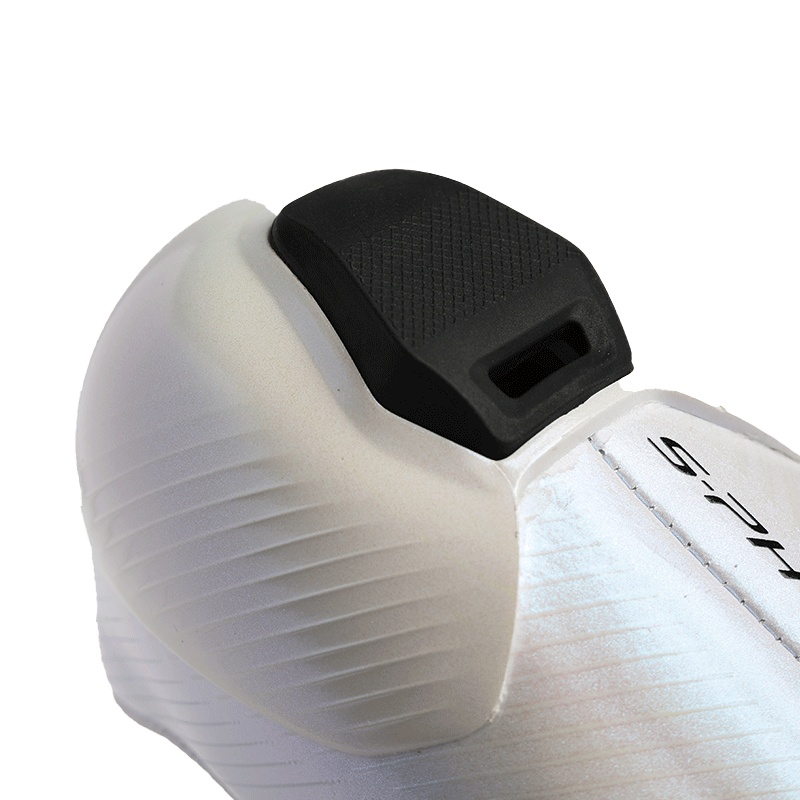
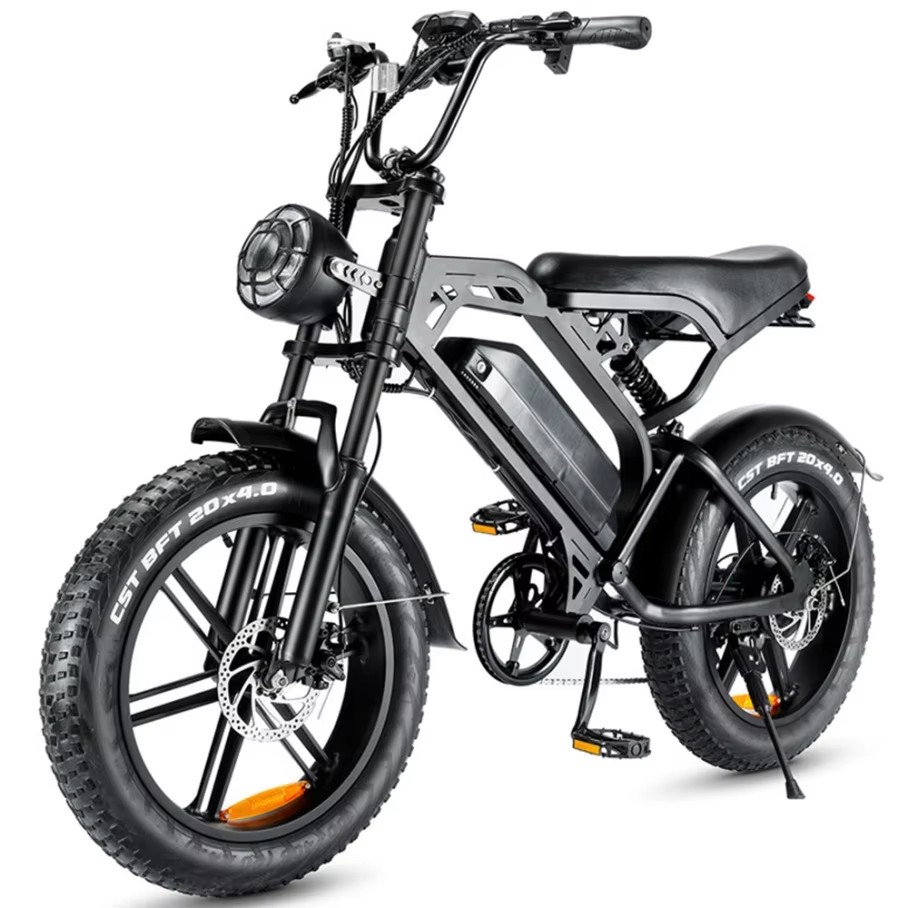
Micro-Prism Photometrics & China Export Engineering
An authoritative breakdown of retroreflective coefficient calculations, cube-corner prism geometry, optical-grade polymer chemistry, and automated ultrasonic sealing methods.
1. Cube-Corner Retroreflection Physics: Total Internal Reflection (TIR)
Unlike standard diffuse reflection (where incident light scatters at Lambertian angles) or specular mirror reflection (where angle of reflection equals angle of incidence relative to the surface normal), bicycle retroreflectors rely on mutual three-surface orthogonal reflection. In micro-prismatic optics, each functional unit is a microscopic trihedral cube-corner pyramid. When an approaching vehicle's headlamp beam strikes any of the three mutually perpendicular facet faces at angles exceeding the critical angle (θc = arcsin(1/n)), light undergoes three successive Total Internal Reflections (TIR), returning parallel to the illumination axis straight back toward the driver's eye-box.
As a premier China bicycle reflector exporter, Kenus Intelligent Technology Co., Ltd. applies optical-grade polymethyl methacrylate (PMMA) boasting a refractive index of n = 1.492 to maximize wide entrance angle retroreflection. In low-cost manufacturing, suboptimal mold machining yields rounded pyramid apexes, introducing catastrophic light spill. At Kenus, high-precision electroformed nickel mold inserts machined via single-point diamond turning (SPDT) ensure that the 90° dihedral angles maintain an angular tolerance within ±1.5 arc-seconds. This dimensional precision sustains high coefficient of luminous intensity (C.I.L. or RI) values well above statutory minimums under high observation angles (up to 1.5°).
R = (I × d²) / E, where I is the reflected luminous intensity (millicandelas), d is observation distance, and E is normal illuminance (lux) measured at the entrance aperture. Kenus reflectors guarantee performance exceeding ISO 6742-2 requirements by at least 35% across all chromatic quadrants (White, Amber, Red).
2. Environmental Hermetic Sealing: 20 kHz Ultrasonic Molecular Welding
The retroreflective properties of cube-corner prisms hinge strictly on an air interface behind the back pyramids. If moisture, condensation, particulate road grime, or detergent solutions touch the prism facets, the refractive index gradient shifts from PMMA/air (1.492 / 1.000) to PMMA/water (1.492 / 1.333). This collapse causes immediate loss of Total Internal Reflection, rendering the reflector opaque and dead to oncoming traffic.
To eradicate this vulnerability, Kenus utilizes high-frequency 20 kHz ultrasonic welding units equipped with micro-step acoustic horns. The optical PMMA front plate is fusion-bonded directly to an opaque, impact-modified ABS or polycarbonate back cover under regulated pneumatic pressure. The energy director melt profile is designed to establish an unbroken, molecular-level hermetic seal capable of passing 48-hour continuous submersion tests, thermal cycle shock tests (-40°C to +85°C), and high-pressure steam jet cleaning (IP67 / IPX9K).
Global Reflector Regulations & Laboratory Test Matrix
Avoid customs seizures and costly product recalls. We cross-engineer our retroreflectors to comply with every target jurisdiction's photometrics, chromaticity coordinates, and impact thresholds.
| Standard / Territory | Applicable Region | Core Photometric Thresholds | Chromaticity & Color Space | Factory Certification Status |
|---|---|---|---|---|
| ISO 6742-2 | International / Global Harmonization | Specific intensity measured at α = 0.2°, 1.5°; β = 0°, ±20° | CIE 1931 Trichromatic Coordinates (Red, Amber, Clear) | ✓ Fully Certified |
| CPSC 16 CFR §1512.16 | United States & North America | Front, rear, pedal, and 360° spoke wheel reflector coverage | Stringent red retroreflection saturation; amber spoke visibility | ✓ Lab Audited |
| StVZO TA 18 ("K-Mark") | Germany (Kraftfahrt-Bundesamt) | Ultra-strict non-dazzle horizontal distribution & C.I.L. curve | High purity monochromatic red/amber; K-Number engraving | ✓ Type-Approved Models |
| ECE Regulation 3 / E-Mark | European Union / UNECE | Class IA / Class IB retroreflective device photometric tests | Strict CIE boundaries; salt spray, ozone, fuel resistance | ✓ Fully Documented |
| AS/NZS 1927:2010 | Australia & New Zealand | Wide-angle side retroreflection; rigorous drop-weight impact | Prescribed yellow/amber spoke & red taillight limits | ✓ Production Verified |
Why Tier-1 Brands Partner with Kenus Intelligent Technology
Headquartered in Jinhua, Zhejiang, Kenus pairs factory-direct manufacturing precision with TÜV Rheinland-assessed reliability, delivering complete supply chain transparency.
TÜV Rheinland Onsite Assessed
Our premises, production lines, in-house machinery, and quality management protocols have been comprehensively evaluated by TÜV Rheinland. We provide downloadable assessment documentation, audited factory video feeds, and verifiable inspection dossiers for corporate procurement vetting.
Documented Global Compliance
No compliance ambiguities. Our accessories and electronics hold certified CE (SIT230614230201E), RoHS (SIT240417230101R, SIT24041230101R), Japanese PSE (SIT240226230301P), and EMC test reports (SIT250212230201ER), ensuring smooth customs clearance worldwide.
Rapid 3D Prototyping & Tooling
Accelerate your time-to-market. Utilizing in-house stereolithography (SLA) and multi-jet 3D printing, we validate custom bracket clamps, aerodynamic profiles, and reflector housings in 72 hours before cutting hardened tool steel injection molds.
Future Trends in Bicycle Reflector Engineering & Procurement
How regulatory shifts, e-bike electrification, and smart infrastructure are reshaping bicycle reflector specifications across Europe, North America, and the Asia-Pacific.
Smart Hybrid Opto-Electronic Integration
Pure passive reflectors are rapidly merging with ambient light-sensing, accelerometer-triggered kinetic brake lights. Modern assemblies house both certified ISO 6742-2 micro-prisms and SMD LEDs inside a single hermetic shell, guaranteeing fail-safe passive return even if the lithium battery depletes.
E-Mobility (48V–72V) System Integration
With the explosive growth of cargo e-bikes and 45 km/h Speed-Pedelecs, reflectors must endure sustained high-frequency vibration, thermal dissipation from internal step-down converters, and rigorous wider-angle horizontal visibility regulations (such as ECE R88 spoke illumination).
Post-Consumer Recycled (PCR) Optics
EU Corporate Sustainability Due Diligence Directive (CSDDD) requirements are pushing OEMs toward circular materials. Kenus is pioneering chemical-grade depolymerized PCR PMMA that maintains 91.5%+ optical transmittance without degradation of yellowing indices or UV resistance.
ADAS & Automotive LiDAR Retrosignatures
As autonomous vehicles proliferate, bicycle reflectors are being engineered with specialized corner retro-prisms optimized for 905nm and 1550nm near-infrared wavelengths, generating distinct LiDAR point-cloud signatures that trigger automatic emergency braking (AEB) systems.
B2B Bicycle Reflector Procurement Questions Answered
Clear, authoritative technical answers addressing materials, compliance verification, mold maintenance, and international freight logistics.
What is the key difference between PMMA and Polycarbonate (PC) in bicycle reflector manufacturing?
How does Kenus prevent water ingress and lens fogging on exported bicycle reflectors?
Which test reports are provided to clear US customs under CPSC 16 CFR Part 1512?
Can you engrave custom OEM logos, brand marks, and K-Numbers into the mold tooling?
What is your typical Minimum Order Quantity (MOQ) and sample lead time for custom tooling?
How does the retroreflective performance of micro-prisms compare to glass bead technology?
What bracket mounting standards and handlebar/seatpost clamp diameters do you support?
How do you verify colorimetric consistency across Red, Amber, and White reflector runs?
What documentation verifies your factory's production and supply chain status?
How does Kenus package bulk reflector consignments for international ocean and air freight?
Scale Your Bicycle Reflector Sourcing with a Verified Exporter
Request certified laboratory photometric reports, CAD/BOM engineering data, or custom branded tooling samples from our Jinhua manufacturing facility.