High-Performance Cycling Accessories & Technical Hardware
Direct manufacturer supply for Lyon distributors, retail bike chains, and outdoor racing teams. Full technical traceability and compliance documented.
Navigating CE Certified Hydration Sourcing for Lyon’s Cycling Ecosystem
A comprehensive technical overview for supply chain managers, sporting brand directors, and cycling accessory distributors across the Auvergne-Rhône-Alpes corridor.
The Métropole de Lyon and the surrounding Auvergne-Rhône-Alpes region have firmly established themselves as the preeminent epicentre of France's cycling revival. Powered by ambitious urban infrastructure investments—most notably the Voies Lyonnaises network, designed to provide 250 kilometres of wide, secured express cycling corridors by 2026/2030—and anchored by historic cyclosportive events, the regional demand for high-end, compliant cycling accessories has surged exponentially. Within this landscape, the bicycle water bottle (bidon) has transitioned from an ordinary promotional giveaway into a technically scrutinised piece of performance sports gear.
For B2B procurement professionals operating out of logistics hubs in Saint-Priest, Vénissieux, Corbas, and the Lyon Perrache distribution zones, sourcing sports hydration products requires navigating strict European Union directives. While commercial colloquialism frequently references "CE Certified Bicycle Water Bottles," precise industrial compliance in the European Union mandates full conformity with Regulation (EC) No 1935/2004 on materials intended to come into contact with food, specific migration limits set out under Commission Regulation (EU) No 10/2011 for plastic materials, and the strict French national oversight conducted by the DGCCRF (Direction Générale de la Concurrence, de la Consommation et de la Répression des Fraudes), including compliance with French Law No. 2012-1442 banning Bisphenol A (BPA) across all food-contact containers.
Material Science: LDPE, Food-Grade PP, and Insulated Stainless Construction
Modern cycling water bottles manufactured for the European professional market rely on three distinct structural material formulations, each engineered to address specific thermal, chemical, and physical deformation criteria:
- Low-Density Polyethylene (LDPE) Formulations: Engineered specifically for instantaneous squeeze discharge. High-grade LDPE polymer resins provide a low flexural modulus (150–300 MPa), ensuring riders can effortlessly expel fluid with minimal grip force. However, poor-quality recycled or improperly cured LDPE frequently emits volatile organic compounds (VOCs) that impart a plastic odor and taste. Our specialized manufacturing lines employ exclusively high-purity medical-grade LDPE with automated high-temperature deodorization chambers, ensuring absolute taste neutrality under prolonged exposure to solar UV radiation.
- Polypropylene (PP) Co-polymers: Offering superior chemical resistance, higher thermal tolerance (dishwasher safe up to 65°C / 149°F), and exceptional crack resistance under dynamic stress. Our odorless PP bottles utilize soft-touch elastomeric side grips co-molded via twin-shot injection tooling, balancing structural firmness with ease of squeezing.
- Double-Wall Vacuum Insulated SUS304 / SUS316 Stainless Steel: For high-heat summer conditions along the Rhône valley and alpine endurance rides, our insulated metal bidons feature an austenitic stainless steel interior core that prevents acidic electrolyte beverage corrosion while sustaining cold liquid temperatures for up to 18 hours.
| Performance Parameter | High-Purity Bio-LDPE | Odorless Co-Polymer PP | Insulated SUS304 Stainless |
|---|---|---|---|
| Target Application | Road Racing / Critérium du Dauphiné | Gravel & Urban Commute (Voies Lyonnaises) | All-Day Touring / Gravel Bikepacking |
| Fluid Flow Rate (ml/sec) | 45 – 52 ml/s (Push-Pull Diaphragm) | 38 – 44 ml/s (High-Flow Membrane) | 28 – 35 ml/s (Ergonomic Straw Valve) |
| Taste Neutrality Index | Grade 4.8 / 5.0 (Degassed Polymer) | Grade 4.9 / 5.0 (Medical Core) | Grade 5.0 / 5.0 (Passivated Electropolished) |
| Cage Retention Compatibility | Universal 74mm Dia. (Groove Locked) | Standard 74mm Dia. (High Grip Notch) | Precision 73.5mm Dia. (Scuff-Resistant Base) |
| EU Food Contact Compliance | (EC) 1935/2004, (EU) 10/2011, French DGCCRF | (EC) 1935/2004, (EU) 10/2011, REACH SVHC | (EC) 1935/2004, French Arrêté 13/01/1976 |
Tailored Hydration Solutions Across Lyon’s Micro-Environments
From the rugged gravel trails of the Monts du Lyonnais to high-density multimodal urban commuting.
Long-Distance ViaRhôna (EuroVelo 17)
Connecting Lake Geneva to the Mediterranean, the ViaRhôna section bisecting Lyon demands high-capacity hydration (750ml to 1000ml) equipped with locking dust-caps. Fine riverbank silt and gravel detritus necessitate hermetically sealed bite valves to prevent particulate ingress during 100+ km touring stages.
Monts du Lyonnais & Beaujolais Gravel
Off-road exploration along the Monts du Lyonnais and the rocky descents of the Col de la Luère exerts violent vibrational G-forces. Our bottles feature reinforced radial constriction grooves that lock precisely into nylon-composite and carbon-fiber cages, sustaining over 40 Newtons of mechanical retention without dislodging.
Voies Lyonnaises & Vélo'v Multimodal Commuting
Urban commuters navigating Lyon's Part-Dieu, Presqu'île, and Gerland business sectors prioritize leakproof, single-handed operation. Our self-sealing membrane nozzles eliminate accidental spillage onto commuter business attire or electronic laptops inside messenger bags when transferring from bike to tramway.
Regulatory Audit: Navigating French DGCCRF & AGEC Legislation
French customs authorities at border inspection posts (such as Marseille-Fos and Lyon-Saint Exupéry multimodal cargo terminals) routinely enforce stringent checks on imported sport water bottles. B2B purchasers must verify that testing reports are issued by accredited test houses (such as TÜV Rheinland, SGS, or Intertek) referencing:
- Overall Migration Limits (OML): In aqueous, acidic (3% acetic acid), and alcoholic simulants, verifying that total migrant compounds remain well below the 10 mg/dm² statutory ceiling.
- Specific Migration Limits (SML): Verification testing of heavy metals (Lead, Cadmium, Cobalt) and primary aromatic amines (PAAs), ensuring zero endocrine-disrupting leachable substances.
- Anti-Waste for a Circular Economy (AGEC) Law: Compliance with mandatory recycling labelling (Triman logo) and environmental sorting instructions (Info-Tri), ensuring commercial packaging is 100% legally marketable within France without regulatory penalties.
Compliance Dossier Checklist for Lyon Importers
- Declaration of Compliance (DoC): Full legal manufacturer statement confirming adherence to Regulation (EC) 1935/2004 and Regulation (EU) 10/2011.
- Bisphenol A Exclusion Certificate: Testing proof compliant with French Law 2012-1442 (Loi BPA) under ultra-trace detection thresholds.
- REACH SVHC Candidate List Clearance: Less than 0.1% w/w for all 240+ Substances of Very High Concern.
- EN 71-3 Heavy Metals Testing: Mandatory for youth-oriented or promotional club bidons.
- Customs Commodity Code Verification: Accurate TARIC classification (HS Code 3923.30 for plastic bottles; HS Code 7323.93 for stainless steel).
Why Lyon Cycling Brands Partner With Kenus Intelligent Technology
Bridging Chinese high-precision automated manufacturing with strict Western European supply chain accountability.
TÜV Rheinland Onsite Verification
Our Jinhua production facilities, automated clean-injection molding lines, and in-house QA laboratories have been rigorously audited onsite by TÜV Rheinland. Full inspection reports, video documentation, and credit histories are transparently available for your compliance review.
Rapid Prototyping & Mold Tooling
Accelerate product concept to retail carton in under 30 days. We combine in-house stereolithography (SLA) 3D printing for physical ergonomic fitting with high-speed CNC mold manufacturing, supporting fully customized bottle body geometries, textured gripping zones, and proprietary closure caps.
Turnkey Consolidation & Flexible Logistics
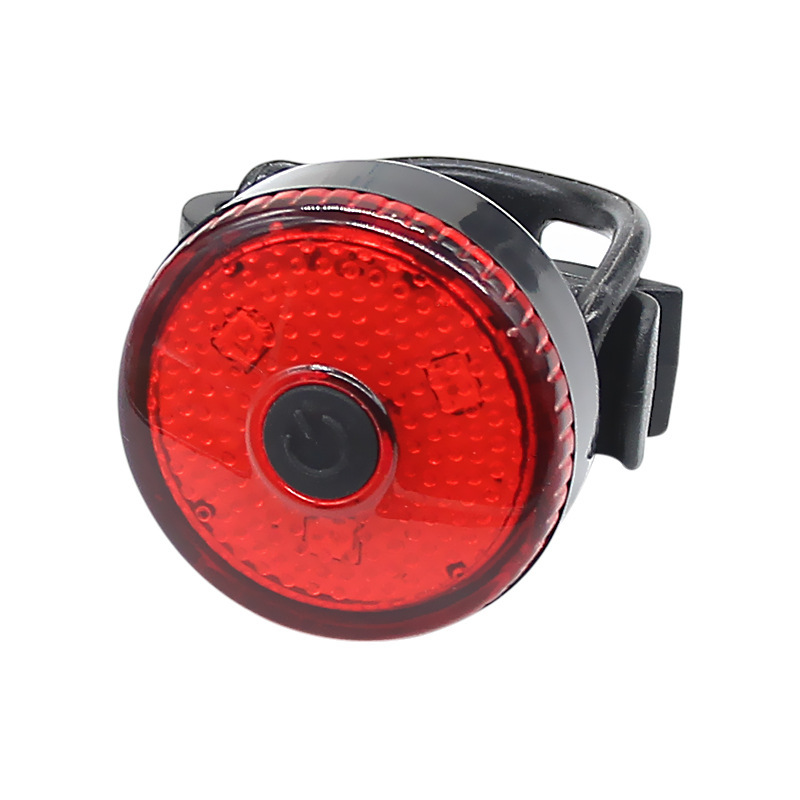
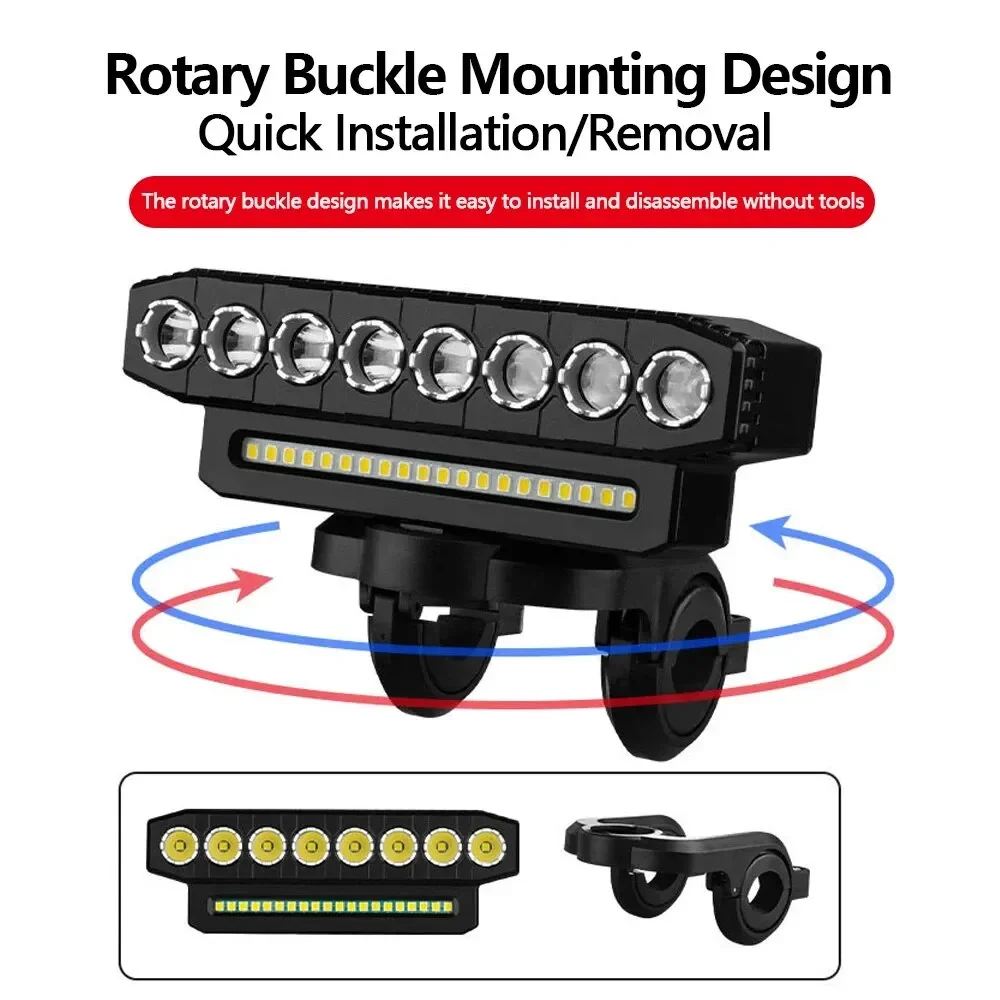
Streamline your import container freight. Consolidate customized CE-certified water bottles alongside our high-volume lines of bike lights, 3D-printed carbon saddles, nylon-bearing pedals, and workshop repair stands under a single bill of lading delivered to your Lyon warehouse under DDP or FOB terms.
Frequently Asked Questions: Bicycle Water Bottle Sourcing in Lyon
Essential guidance covering technical minimums, testing documentation, lead times, and customs clearance.
What is the minimum order quantity (MOQ) for custom-branded cycling bottles?
For custom silk-screen or 360-degree digital rotary printed squeeze bottles featuring your cycling club, bicycle shop, or event brand logo, our baseline MOQ starts at just 100 units on ready-to-ship molded stock. For bespoke Pantone body color matching or proprietary injection mold tooling, the standard production run starts at 1,000 to 3,000 units.
Can your bottles withstand the cobbles and uneven pavement of Old Lyon (Vieux-Lyon)?
Yes. Our bottles are dimensioned precisely to the European standard 74mm cage caliber, featuring deep-profile retention neck grooves. In dynamic mechanical drop-and-vibration rig tests simulating Paris-Roubaix and Lyon historic paved descents, our bottles paired with composite side-entry or central-entry cages maintained consistent grip retention up to 42 Newtons of vertical pull.
How do you guarantee compliance with French DGCCRF food-contact mandates?
Every raw polymer batch (PP/LDPE) is subjected to rigorous incoming inspection and certified against EU Regulation 10/2011 and French Decree 2007-766. We supply certified lab documentation verifying undetectable levels of BPA, BPS, phthalates, and compliant overall migration limits tested in both polar and non-polar liquid food simulants.
What shipping corridors are utilized for direct freight into the Métropole de Lyon?
We manage direct sea-freight containers via the Port of Marseille-Fos with rapid bonded barge/rail transfer up the Rhône corridor directly to Port Édouard Herriot (Lyon), achieving rapid clearance into regional logistics platforms in Corbas and Saint-Priest. Air cargo for high-priority sampling arrives via Lyon-Saint Exupéry (LYS) in 5–7 business days.
Can we consolidate bicycle water bottles with bike lights, tools, and saddles?
Yes. Our factory in Jinhua, Zhejiang, operates dedicated assembly lines across six core accessory categories. This allows French wholesale buyers to consolidate mixed-category SKUs—such as CE/RoHS certified bicycle lights, 3D printed carbon saddles, and water bottle cages—within a single unified shipping container, dramatically reducing per-unit freight and import clearance overhead.
What surface printing technologies are available for high-definition logos?
We offer high-durability UV rotary screen printing, heat transfer printing, and full-wrap digital CMYK processes. All printing inks utilized are non-toxic, eco-solvent formulations tested to withstand high-pressure abrasive friction, solvent cleaning, and up to 100 industrial dishwasher cycles without graphic peeling or color degradation.
Request Full Technical Specifications & B2B Pricing
Connect immediately with our engineering and export team. Receive complete product data sheets, TÜV inspection reports, and container shipping calculations for Greater Lyon.