High-Performance Helmets, E-Bikes & Rider Safety Accessories
Helmets in the Czech commercial space rarely sell in isolation. Maximize container capacity and retail basket value by consolidating EN-compliant head protection with complementary workshop, cockpit, and urban mobility hardware.
1. Regulatory Framework & Technical Mandates in the Czech Republic (ČSN EN 1078+A1)
The Czech cycling marketplace is characterized by one of Central Europe's highest per-capita bicycle ownership ratios. However, supplying helmets into the Czech Republic (Česká republika) requires navigating strict statutory parameters overseen by the Czech Trade Inspection Authority (Česká obchodní inspekce - ČOI). Under Czech Law No. 22/1997 Coll. on Technical Requirements for Products and Government Order No. 21/2003 Coll., all adult and youth cycling helmets placed on the commercial market must adhere to ČSN EN 1078+A1:2012 (Helmets for pedal cyclists and for users of skateboards and roller skates), harmonized under European PPE Regulation (EU) 2016/425.
Under Czech road traffic legislation (Zákon o silničním provozu č. 361/2000 Sb., § 58 odst. 1), bicycle helmets are legally mandatory for all riders under 18 years of age. While adult helmet adoption is non-compulsory under basic statute, civil court rulings and insurance carriers consistently consider non-use as contributory negligence in vehicular liability disputes. Consequently, institutional buyers, e-bike leasing platforms, and major domestic sporting distribution chains (e.g., Sportisimo, Decathlon CZ, specialized Prague/Brno retailers) require rigorous certification portfolios.
| Safety Standard | Target Discipline in Czechia | Critical Test Criteria | Required European Documentation |
|---|---|---|---|
| ČSN EN 1078+A1 | Standard Road, Commuter, Trail MTB | Flat & kerbstone anvil impact drop at 5.42 m/s; retention buckle slippage < 35mm | CE Certificate (Notified Body) + EU Declaration of Conformity (DoC) |
| ČSN EN 1080 | Junior & Toddler Helmets (Sub-18 compliance) | Self-releasing chin strap mechanism at 90–160 N to avoid playground strangulation hazards | Type Examination Certification + Batch Traceability Markings |
| NTA 8776 | Speed-Pedelecs (S-Pedelecs up to 45 km/h) | Expanded temporal and occipital coverage; 21% greater shock absorption than EN 1078 | Dutch NTA Accreditation or TÜV Rheinland Equivalent Assessment |
| ASTM F1952-15 | Downhill & Enduro Bikepark (Špičák, Rychleby) | Rigid chin bar deflection test < 60mm under 5kg drop anvil impact | Laboratory Test Report + Structural Integrity Validation |
B2B buyers sourcing for the Czech territory must recognize that labels and user instructions (Návod k použití) must be provided in the Czech language, listing the production date, batch code, helmet weight, head circumference range in centimeters, and explicit CE mark with the accredited laboratory number.
2. Localized Czech Application Scenarios & Demographics
The Czech topography presents distinct operational demands, from the cobblestoned, mixed-transit arterials of Prague and Brno to the rugged granite and root-laced singletracks of Krkonoše, Šumava, and the Krušné hory. Manufacturers supplying Czech entities must tailor helmet ventilation, shell construction, and safety integrations to three primary real-world settings:
Urban Commuting & Prague Cobblestones
Riding over historic cobblestones (such as Malá Strana and Vinohrady) induces high-frequency micro-vibrations that loosen substandard 3-point harness systems. Urban riders demand integrated rear LED lighting compatible with dark Bohemian winters, reflective rear diffusers, and In-Mold PC shells that withstand daily lockup knocks.
Singltrek pod Smrkem & Bikeparks
The Czech Republic is world-renowned for trail centers like Singltrek pod Smrkem, Rychlebské stezky, and Bikepark Špičák. Trail and Enduro riders prioritize extended occipital coverage, rotational force dampening liners (MIPS-compatible EPS molding), detachable chin bars, and adjustable goggle ports.
High-Speed E-Bike Touring (Labská stezka)
With the explosion of long-distance cyclo-tourism along the Elbe Cycle Route (Labská stezka) and Moravian wine trails, elderly and touring riders average 25–35 km/h over undulating elevation profiles. These users seek lightweight ventilation channels, integrated sun visors, and NTA 8776 certification.
3. Strategic Industry Trends Shaping Czech Sourcing (2025–2030)
1. Electrification and Speed-Pedelec Standardization: E-bikes now account for upwards of 35% of all bicycle sales in the Czech specialty trade. As 45 km/h S-Pedelecs expand into suburban transit corridors between Central Bohemia (Středočeský kraj) and Prague, conventional EN 1078 helmets are proving insufficient. Wholesalers are transitioning rapidly to NTA 8776-certified helmets with expanded EPS density at the temporal and occipital lobes.
2. Smart Helmets with Integrated Telematics: As municipal cycling corridors interface with heavy automotive traffic on Czech Class I and II roadways, B2B demand for smart helmets has accelerated. Commercial fleets and urban riders demand embedded Bluetooth mesh communication, ultra-bright directional turn indicators, and brake-activated decelerometer LEDs that run on low-power rechargeable lithium architectures.
3. Circular Materials & ESG Procurement: Czech institutional distributors are increasingly held accountable to EU Corporate Sustainability Due Diligence Directives (CSDDD). Helmet importers require supply partners who utilize recycled EPS (poly-source expanded polystyrene), post-consumer recycled polycarbonate outer shells, and eco-friendly bio-based webbing straps without compromising dynamic impact thresholds.
4. Kenus Advantage: Verified Engineering & Direct Factory Control
As an assessed manufacturing powerhouse based in Jinhua, Zhejiang, Kenus Intelligent Technology Co., Ltd. resolves the chief vulnerabilities Czech importers encounter: erratic quality consistency, unverified laboratory documentation, and fragmented supply chains. We bridge the gap between advanced Chinese manufacturing velocity and European regulatory precision.
TÜV Rheinland Onsite Verification
Unlike trading brokers, our production lines, hardware forging capabilities, and QA/QC management systems have been evaluated onsite by TÜV Rheinland. We maintain transparent legal status, export credit verification, and full laboratory audit trails.
In-House Rapid 3D Prototyping
Our internal R&D wing operates high-precision 3D industrial printing alongside CNC machining. Czech private brands can evaluate physical helmet vent shells, retention dials, and integrated mountings within 7 days prior to steel mold investment.
Top-Tier Accessory Consolidation
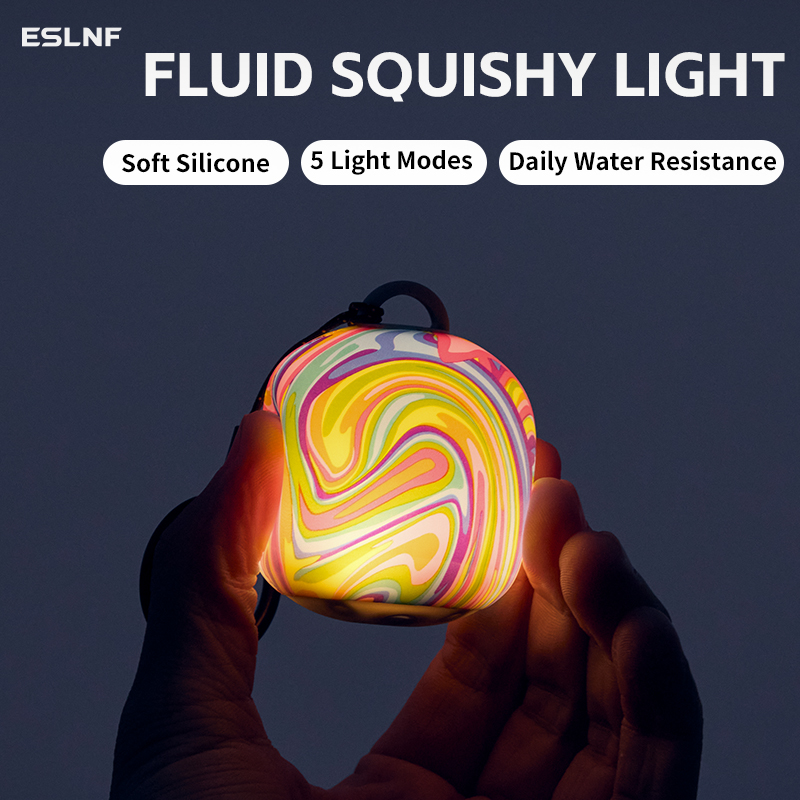
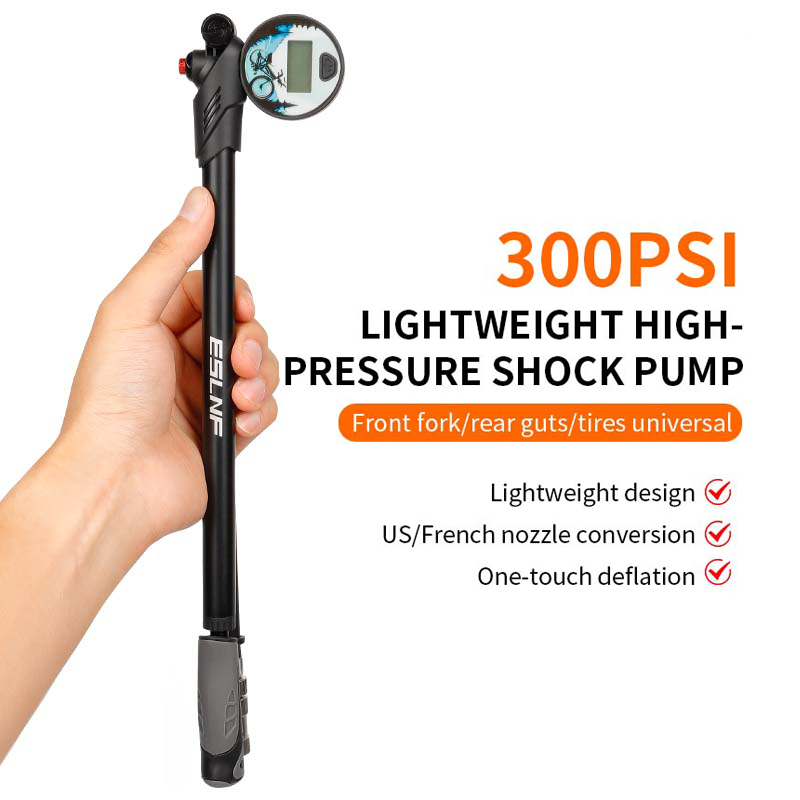
As the #2 top-selling supplier in bicycle pedals and bicycle lights, Kenus enables Czech importers to consolidate full-container loads (FCL) combining certified helmets with high-lumen CE/RoHS smart lights, 3D printed saddles, and workshop tools.
Frequently Asked Questions by Czech Importers & Wholesalers
Direct answers addressing customs procedures, testing protocols, and OEM production terms for the Czech commercial territory.
What exact test documentation must accompany helmet shipments at Czech Customs (Celní správa ČR)?
Customs clearance at major Czech inland freight terminals (such as Praha-Uhříněves, Brno, or Ostrava) requires an authentic CE Type Examination Certificate issued by an accredited EU Notified Body under PPE Regulation 2016/425, an official EU Declaration of Conformity (DoC), and packaging containing the CE mark alongside user instructions translated into Czech.
Can Kenus support custom helmet sizing for the European cranial index?
Yes. European skull shapes predominantly follow an intermediate oval morphology compared to round Asian profiles. Our in-house engineering team designs and molds EPS liners tailored explicitly to European dimensional charts (Small: 51–55cm, Medium: 55–59cm, Large: 59–63cm) featuring multi-position rear retention cradles.
What is the standard MOQ and lead time for private-label OEM helmet orders?
For custom graphic water decals, PMS color-matched polycarbonate outer shells, and branded webbing buckles, our standard MOQ starts at 500–1,000 units per mold. Sample prototyping takes 7–10 days, while mass injection, in-mold bonding, and assembly are completed within 35–45 days.
How do you facilitate consolidated container freight into the Czech Republic?
We manage FOB Ningbo/Shanghai shipments as well as multimodal rail and sea freight (via Hamburg, Koper, or direct rail to Česká Třebová). Buyers frequently consolidate helmets alongside our verified lighting systems (CE, RoHS, PSE), nylon pedals, and CNC tools under a single Bill of Lading.