Precision Cycling Hardware & Modular Infrastructure Ecosystem
Direct factory-manufactured cycling equipment, precision assemblies, and companion accessories built with robotic welding, CNC tube profiling, and strict TÜV Rheinland-assessed quality control.
High-Density Urban Mobility: Vertical Parking Engineering for Luxembourg's Green Transition
The Grand Duchy of Luxembourg represents one of Europe's most dynamic and demanding testing grounds for multi-modal urban mobility. With the state-mandated Plan National de Mobilité (PNM 2035), free nationwide public transit, and a concerted national strategy to increase cycling modal share to over 20% in urban clusters, the pressure on municipal planners, commercial real estate developers, and corporate facility directors has shifted fundamentally toward spatial efficiency.
Luxembourg's commercial property values—particularly within the financial center of Kirchberg, the historic districts of Ville Haute, and modern innovation districts like Belval (Esch-sur-Alzette)—command exceptional square-meter valuations. Dedicated basement bicycle parking, historically relegated to unorganized ground slots, now directly impacts commercial building compliance, tenant satisfaction, and international sustainability certifications such as BREEAM, HQE, and DGNB. As an established OEM/ODM manufacturer verified onsite by TÜV Rheinland, Kenus Intelligent Technology Co., Ltd. supplies industrial-grade vertical bike parking racks, gas-strut lift systems, and heavy-duty cycling storage hardware customized specifically to the spatial, climatic, and regulatory standards of the Luxembourgish market.
Technical Insight: Traditional horizontal bicycle racks (such as simple Sheffield hoops or low-staggered wheel clamps) demand an average footprint of 1.6 to 1.9 m² per bicycle when accounting for access aisles. Kenus vertical parking architecture reduces the allocated static surface area to 0.45–0.62 m² per bicycle—generating up to a 62% spatial yield recovery in commercial underground parking garages.
Kinematic Principles: Gas-Strut Lift Assist vs. Static Hook Geometry
In the Luxembourgish commuter fleet, heavy pedelecs and e-bikes represent nearly 48% of newly purchased adult cycles. This creates a critical occupational health and ergonomic challenge: while standard human-powered road or commuter bicycles weigh between 9 and 14 kg, modern urban electric bikes equipped with mid-drive motors and 600–750 Wh battery packs weigh between 24 and 32 kg. Traditional static vertical hooks, which require the user to dead-lift the complete bicycle mass above wheel height, fail municipal accessibility criteria and alienate non-athletic daily commuters.
Our OEM/ODM engineering teams deploy an industrial calibrated gas-piston dampening mechanism inside the structural vertical column. When the cyclist engages the front wheel roll-in cradle, a localized mechanical latch triggers an upward assisted stroke of 180N to 260N (custom-tuned according to specified payload classes). The operator exerts less than 7.5 kg of lifting force to smoothly elevate an e-bike into an upright 90-degree vertical orientation. A patented progressive decelerator prevents rapid snap-back when the rack is unloaded, guaranteeing safety in unattended communal spaces.
Structural C4/C5 Corrosion Protection
Luxembourg winters require intensive road de-icing via sodium and calcium chloride brine. Commuter bikes track wet saline moisture into basement garages. Kenus frames utilize hot-dip galvanization conforming to EN ISO 1461, overlaid with electrostatically applied 80μm architectural polyester powder coating.
Integrated 3-Point Anti-Theft Locking
High capital equipment values of modern pedelecs make theft security paramount. Kenus vertical racks incorporate 14mm case-hardened alloy steel locking loops integrated directly into the chassis, allowing users to secure both the structural frame and the front wheel using standard D-locks or chain locks.
Tire Width Modularity (23mm to 3.0")
From narrow tubular tires on road racing cycles to 2.8" balloon tires on trekking e-bikes, our roll-in V-cradle auto-centers the wheel rim without exerting lateral stress on delicate brake discs, carbon spokes, or dynamo wiring harnesses.
Quantitative Engineering Comparison: Bike Parking Architectures
| Parking Architecture | Effective Space Per Bike | E-Bike Ergonomic Lift Effort | Rim / Spoke Deformation Risk | DIN 79008 Compliance | Primary Luxembourg Use-Case |
|---|---|---|---|---|---|
| Kenus Gas-Assist Vertical (V-Lift Pro) | 0.52 m² | < 7.5 kg (Hydraulic Assisted) | Zero (Hub & Rim Floating Bed) | Full Conformity | Kirchberg HQ, CFL Hubs, Multi-Family Residential |
| Static Wall Hook (Economy) | 0.65 m² | 26–30 kg (Full Weight Lift) | High (Spoke Hanging Strain) | Non-Compliant | Private Domestic Sheds, Small Utility Closets |
| Double-Deck Two-Tier Pullout | 0.75 m² | 12–16 kg (Gas-Spring Arm) | Low (Channel Guided) | Conformity (Class A) | High-Capacity Train Station Basements |
| Traditional Sheffield Hoops | 1.85 m² | Zero (Ground Floor Roll-In) | Zero | Conformity (Class B) | Public Parks, Street Sidewalks, School Forecourts |
Localized Application Scenarios in Luxembourg Municipalities & Districts
Engineering commercial bicycle parking infrastructure for Luxembourg demands an intimate appreciation of regional urban planning directives, transport nodes, and architectural typologies. As an OEM and ODM production partner, Kenus configures bespoke mounting brackets, modular floor rail channels, and custom RAL color codings to integrate seamlessly into diverse built environments.
Plateau de Kirchberg Corporate Towers
Home to the European Union institutions, multinational financial headquarters, and major auditing firms. Here, corporate ESG travel plans mandate premium end-of-trip bike facilities equipped with gas-strut vertical racks, secure badge-access lockups, and e-bike charging docks.
CFL Transit Stations & mBox Hubs
Société Nationale des Chemins de Fer Luxembourgeois (CFL) operates intermodal mBox secure bike parking. Kenus modular vertical racks maximize throughput inside standardized transport shipping containers and pre-fabricated modular shelters.
PAG/PAP Multi-Family Housing
Under municipal Plan d’Aménagement Général (PAG) guidelines, Luxembourg City, Strassen, and Bertrange require strict minimum bicycle parking quotas per residential housing unit. Vertical racks solve developer footprint constraints in compact underground garages.
Esch-Belval University & Research Campus
With thousands of cross-border commuters from France and Belgium connecting at Belval-Université, high-throughput durability and abuse-resistant locking systems are critical to maintain order amidst high student bicycle densities.
Synergistic Compatibility with the vel'OH! and Vëlodukt Networks
Luxembourg’s investment in large-scale urban infrastructure—exemplified by the Vëlodukt connecting Esch-sur-Alzette to Belval, as well as the expanding municipal vel'OH! self-service bike network—has heightened general cycling awareness. However, private bicycle owners who commute from outer communes (such as Mamer, Dudelange, or Bettembourg) require dedicated vertical stations that keep their expensive multi-gear or belted-drive bicycles elevated, dry, and protected from side-impact abrasions caused by adjacent handlebars.
Luxembourgish Regulatory Frameworks & European Standards Conformity
Procuring commercial cycling equipment within Luxembourg requires navigating both national urban planning guidelines and harmonized European technical standards. Kenus products are developed and tested to satisfy rigorous compliance frameworks:
- DIN 79008 Stationary Bicycle Parking Systems: European benchmark governing anti-theft security, wheel stability, and non-destructive rim support. Kenus vertical racks are tested to withstand a continuous lateral pull force exceeding 1.0 kN without permanent frame deformation.
- BREEAM International & DGNB Green Building Rating Credits: Certified bicycle parking stations with user-friendly ergonomics, weather shielding, and dedicated lockup loops contribute directly toward BREEAM Tra 03 (Alternative Modes of Transport) points, enhancing real estate appraisal values for institutional developers in Cloche d'Or and Leudelange.
- Klimabonus State Subsidies Impact: The Luxembourg Ministry of Environment, Climate and Sustainable Development provides direct subsidies (up to €1,000) for private e-bike and cargo bike purchases. The resulting surge in heavier, higher-spec commuter bikes requires infrastructure rated for 35 kg working loads, exceeding older 20 kg standard norms.
- Fire Safety & Egress Pathways (ITM Regulations): The Inspection du Travail et des Mines (ITM) enforces strict clear-passage corridor regulations in underground facilities. Vertical racks lift bicycles upright against load-bearing perimeter walls, maintaining required 1.20-meter fire evacuation corridors that horizontal racks frequently obstruct.
OEM/ODM Engineering Capabilities: Kenus Intelligent Technology
Based in Jinhua, Zhejiang—one of the world's most sophisticated clusters for precision hardware, micro-mobility engineering, and cycling component manufacturing—Kenus Intelligent Technology Co., Ltd. operates as a dedicated B2B partner for European distributors, contractors, and local brands. Our comprehensive onsite assessment conducted by TÜV Rheinland guarantees total transparency across legal corporate standing, production floor capabilities, machine assets, and quality management protocols.
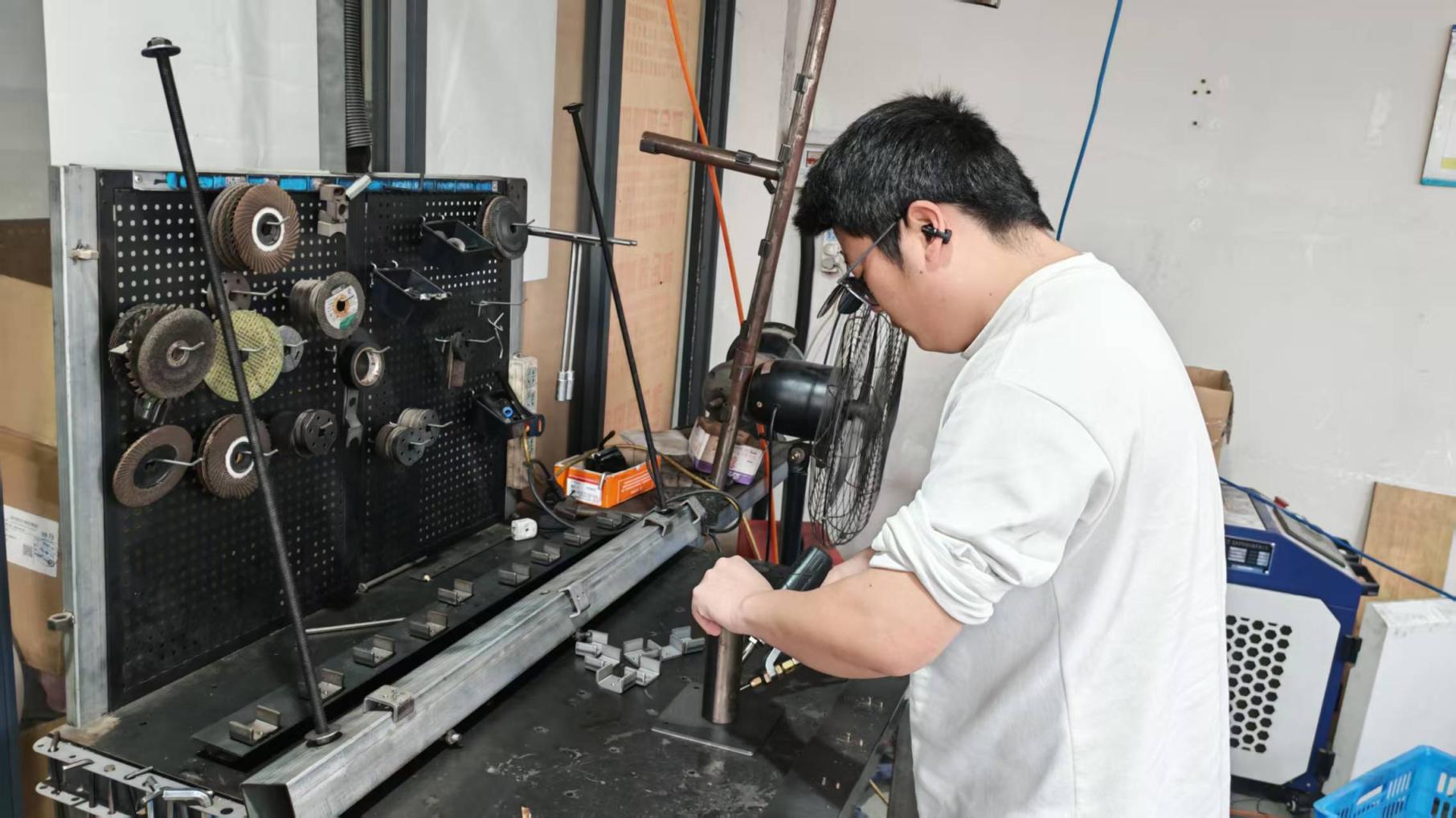 TIG & Robotic MIG Welding Station
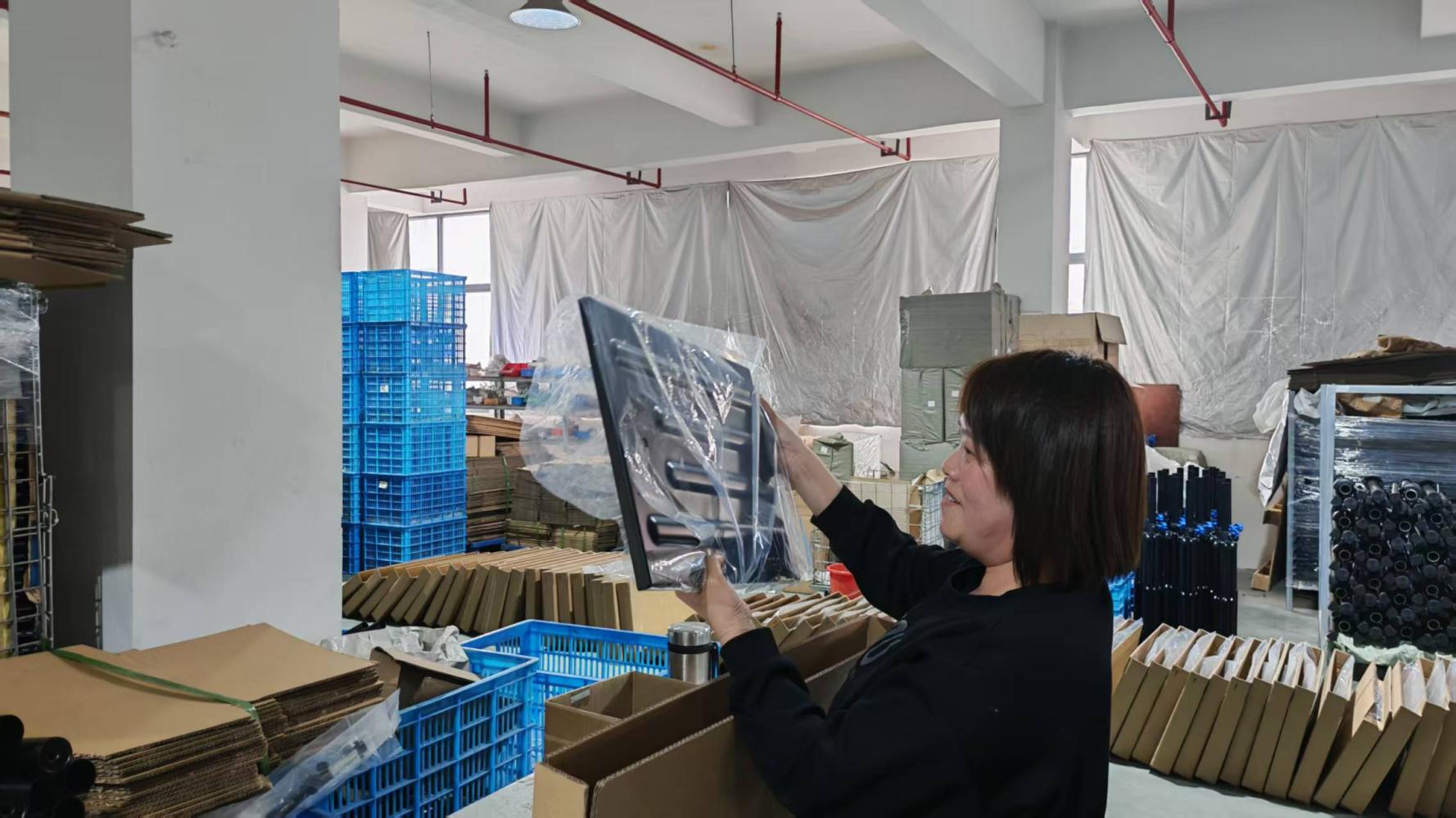 In-Line Load & Deflection QA/QC
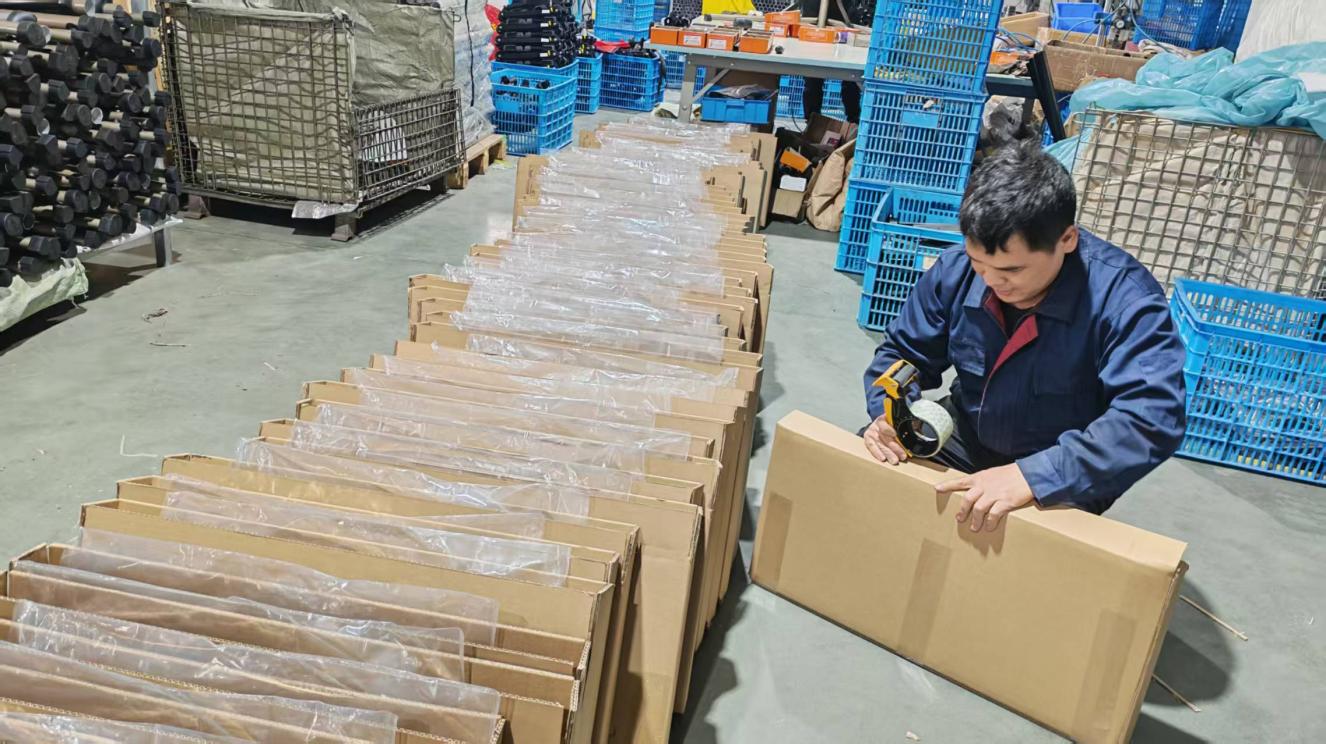 Palletized Export Packaging Line
In-House Tooling & 3D Prototyping
Our rapid product development workflow utilizes industrial 3D additive printing, parametric SolidWorks CAD modeling, and custom CNC tube bending. We turn conceptual architectural sketches into verified physical metal prototypes within 14 business days.
Documented EU Certification Suite
Kenus maintains authenticated test documentation across European regulatory domains, including CE Directives (SIT230614230201E), RoHS chemical substance compliance (SIT240417230101R), Japanese PSE (SIT240226230301P), and comprehensive EMC electronic emission tests.
Container Optimization & Direct Logistics
All vertical rack components are engineered for knock-down (CKD) modular assembly. Flat-pack nesting reduces ocean shipping volume by up to 58%, allowing cost-effective maritime transit into Antwerp or Rotterdam followed by bonded rail/truck delivery to Luxembourg.
Frequently Asked Questions (FAQ) for Luxembourg Procurement Managers
How do Kenus vertical bike racks support intra-community trade and Luxembourg VAT (TVA)?
Are Kenus vertical racks compatible with heavy European pedelecs and electric cargo bikes?
What surface treatment is specified to resist salt-water de-icing brine used in Luxembourg winters?
Can Kenus provide custom RAL powder coatings to match corporate or municipal branding guidelines?
What is the typical production lead time and shipping duration to the Grand Duchy of Luxembourg?
Do the racks comply with ADFC and DIN 79008 safety standards required in public tenders?
Deploy Certified Vertical Bike Parking in Luxembourg
Connect directly with our engineering department to receive technical CAD drawings, BIM models, spatial density layout plans, and quotation schedules tailored to your architectural project specifications.